

Author: Sadique Uddin
Affiliation: Outreach Specialist, Michigan State University
Date: 29 October 2025
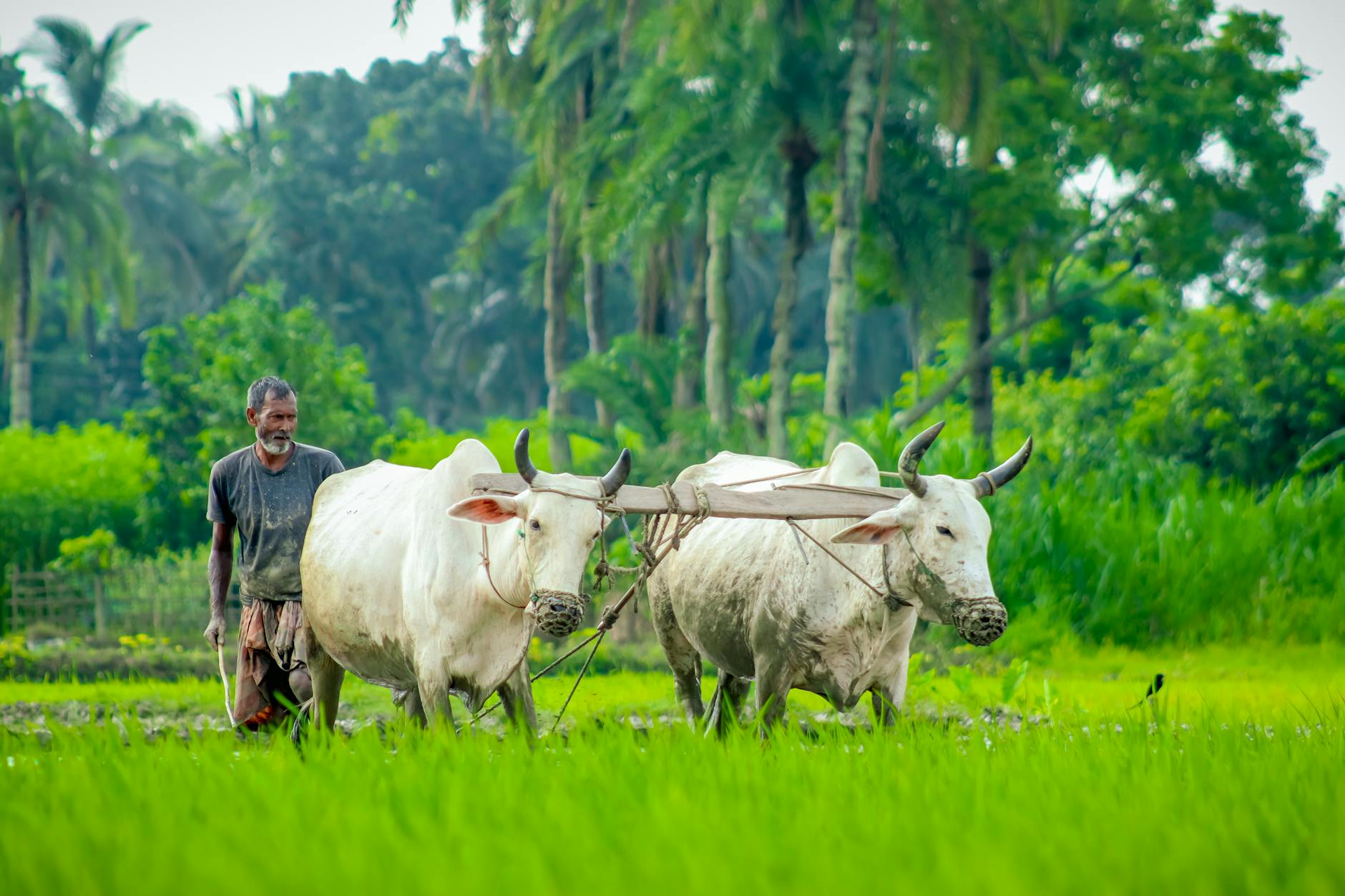
I still remember the weight of the wooden plough in my small hands as I helped my father work our family’s fields in rural Bangladesh. While wealthy landowners nearby harvested triple our yields using tractors, we relied on buffaloes and prayers for rain. The gap wasn’t just in our harvests—it was in our futures.
Three decades later, leading agricultural innovation projects across Bangladesh, I see that gap has only transformed, not closed. Today’s divide isn’t about tractors versus buffaloes.
It’s about AI-powered crop monitoring, climate-smart technologies, and digital marketplaces that could revolutionize smallholder farming if only farmers could access them.
The New Inequality
The digital revolution promised to democratize opportunity. Instead, it has amplified existing inequalities. Millions of smallholder farmers who produce over 70% of the world’s food—remain locked out of innovations designed to help them.
As climate change intensifies, bringing erratic rainfall and extreme weather, these farmers need digital tools more than ever. Yet they face compounding barriers: limited connectivity, lack of digital literacy, unaffordable devices, and technologies designed for wealthy markets rather than resource-constrained realities.
The cruel irony: those most vulnerable to climate change have the least access to climate adaptation technologies.
Through fourteen years in development, visiting villages, and meeting hundreds of farmers, I’ve learned that technology’s benefits don’t trickle down automatically.
Most agricultural innovations are developed by profit-seeking firms responding to affluent markets. A precision irrigation system designed for California won’t work on a half-acre plot in Bangladesh without electricity.
What Actually Works
Bridging this divide requires comprehensive, equity-centered approaches:
Design with farmers, not just for them.
Technologies must be co-created with smallholder communities. Simple SMS-based weather advisories working on basic phones have proven more effective than sophisticated apps requiring smartphones. Appropriate technology matters more than cutting-edge innovation.
Treat digital literacy as essential agricultural knowledge.
Extension services must include technology training in local languages. This isn’t about teaching farmers to code, it’s about building confidence with tools that improve livelihoods.
Build ecosystems, not isolated tools.
Technology adoption requires supportive infrastructure: rural connectivity, affordable devices, accessible payment systems, and regulations protecting smallholder data rights.
Deploy AI for equity, not just efficiency.
Artificial intelligence could be agriculture’s great equalizer. AI-powered advisory services can deliver personalized agronomic advice at scale. Machine learning can predict pest outbreaks for small plots. But this requires training models on smallholder data and ensuring affordability.
Support local agri-tech entrepreneurship.
The most effective solutions often come from entrepreneurs who understand local challenges. Startup incubators focused on agricultural technology can generate truly contextual innovations with patient capital and community connections.
Make climate information accessible.
Farmers need early warning systems and knowledge about climate-adapted practices. This information exists but rarely reaches those who need it most. In the climate crisis, this isn’t optional, it’s survival.
The Imperative of Now
Every planting season without action deepens inequality. In Bangladesh, where agriculture employs nearly 40% of the workforce, the stakes are enormous. Multiply that across South-East Asia and sub-Saharan Africa, and the imperative becomes undeniable.
Yet I remain hopeful. I’ve watched farmers transform their yields after receiving timely weather information. I’ve seen women use mobile platforms to bypass exploitative middlemen. I’ve witnessed communities organizing through digital networks.
When I work with farmers across South Asia today, I see my father’s determination in their faces. Like him, they work incredibly hard and deserve access to every tool that could improve their lives. The difference is that today, those tools exist and through global partnerships and knowledge networks, we have the means to deliver them.
Our challenge is ensuring that innovation serves equity, that technology becomes a ladder rather than a wall, and that the digital revolution reaches the farmer’s field. The future of food security and climate resilience depends on whether we act before the gap becomes unbridgeable.




 Scientect