

Author: Maxine Mpofu (She/Her)
Affiliation: Postgraduate Researcher | Academic Assistant, Northumbria University, Centre for Global Development
Date: 25 July 2025
Happy International Day for women and girls of African descent!
I am Sichelesile Nomalungelo Maxine Mpofu. My first name, Sichelesile, means “we are full of joy” in my native tongue, isiNdebele, while Nomalungelo loosely translates to “mother of justice”. Maxine, the English name, is a story for another day. My surname, Mpofu, is a Mhofu totem, Chihera ,- an Eland – a majestic spiral-horned antelope. I am the daughter of umama uMaThusi and granddaughter of ugogo uMaNcube. After my mother’s passing, my uncle, uMalume usekaBusi, and aunts raised me. Though my father’s homestead lies in Filabusi, eAvoca koChief Maduna, I grew up in-between the serenity of my uncle’s homestead koMteteyi in Solusi village and the vibrancy of ekasi in Lobengula West, koBulawayo, -the City of Kings and Queens in Zimbabwe.
My childhood was woven with joy and laughter. Memories of dusty legs after playing with friends, losing track of time, flood my mind. We’d walk home anxiously, knowing the lashing awaiting us was ‘worth’ the fun. In the village, evenings by the fire, filled with folktales and eating from the same plate, sparked imagination and connection.
I began my education at Mawaba Primary School in Bulawayo, briefly attended Avoca Primary School in the village, and later returned to the city for high school at Sizane in Number 6. Relocating to the capital, Harare for my undergraduate degree, I never imagined receiving a bursary for a master’s programme or a studentship to pursue a PhD abroad. A photograph of myself in my primary school uniform sits on my desk, a reminder of the ‘chaos’ and joy of my journey.
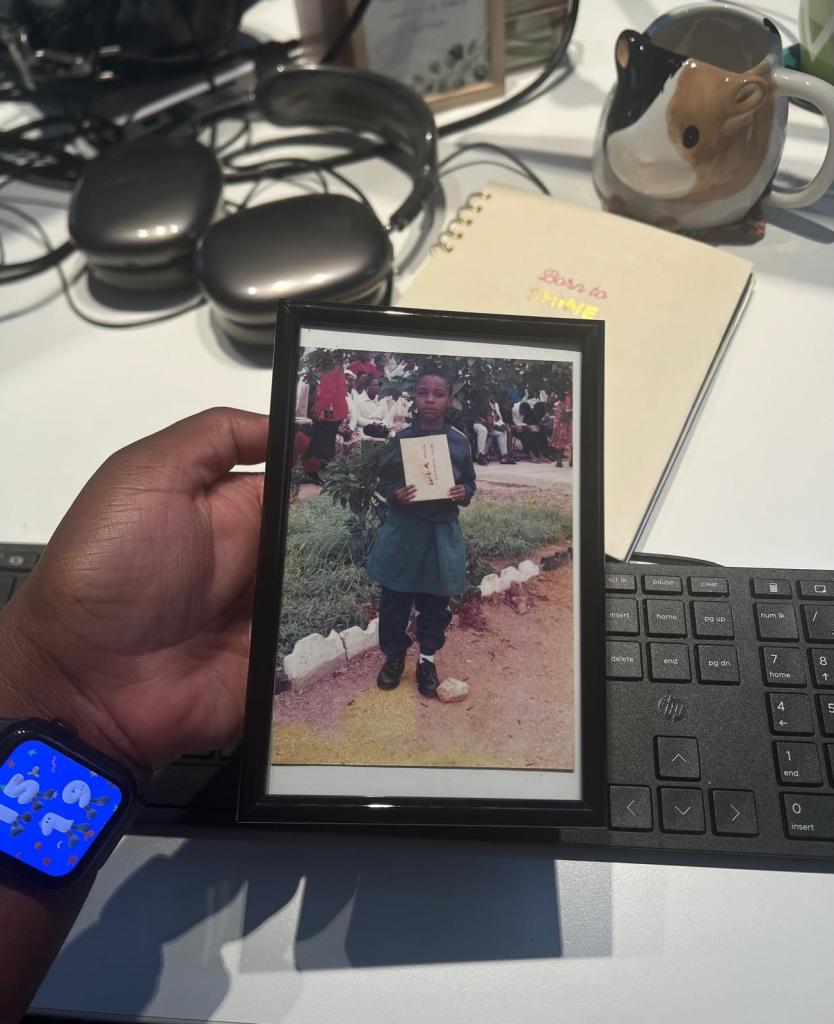
I didn’t do it alone. I am a beneficiary of extended family support and mentorship from Afro-feminists like Sandra Bhatasara, Naomi Wekwete. I was modelled by sharing spaces with joyful incredible young women like Hazel Jojo – rest in peace leadership. My story also intertwines with those of my friends and cousin sisters the curious and feisty sistren – abomasalu.
I share these snippets of my story not to romanticise the life of an African girl but to demand epistemic justice. Narratives about African girls and women are often reduced to sorrow or struggle, yet they also brim with joy and resilience. As we mark the International Day for Women and Girls of African Descent amid a global polycrisis – where African women and girls bear disproportionate burdens – I urge us to see beyond statistics.
We are people with lived experiences, not mere data points.
Combating negative racial and gender stereotypes in media, policy, and education resonates deeply. I implore storytellers to seek Black Joy – not to mask injustice but to demonstrate resistance against one-dimensional narratives.
Black Joy is defiance, a refusal to let our story be half-told. I could recount the barriers I’ve faced in my personal and professional journey or narrate how ‘empowerment’ has opened life-changing opportunities for me. But those stories are familiar. Instead, I choose to centre joy, mindful of my relative privilege.
I honour my foremothers, whose struggles, joy, and persistence shaped me. I highlight my uncle, who, though a man, embraced a ‘maternal’ role after my mother’s death, showing that African men share the responsibility of fostering our joy.
I invite you to remember African women and girls denied joy and to work towards closing equality gaps, so joy becomes attainable for all. An African girl is umuntu – a human. Umuntu ngumuntu ngabantu: “a person is a person through other people”. Ensuring joy for African girls and women is a collective responsibility.
Joy for all need not be Afro-futuristic fiction; it can be reality. Let us amplify individual stories to identify those needing support and those with platforms to accelerate change. By embracing the fullness of our experiences – joy, struggle, and all- we can create a world where all African women and girls thrive.




 Scientect
Leave a comment