
Author: Shabnam Narval
Affiliation: National Institute of Immunology, New Delhi, India.
Date: 25 May 2025
Every time you take antibiotics for a sore throat, you could be contributing to a global health crisis.
The Discovery That Changed Medicine
Antibiotics are among the greatest medical breakthroughs of the 20th century. These molecules kill or inhibit the growth of bacteria, revolutionizing how we treat infections. The first antibiotic, penicillin, was discovered by Alexander Fleming in 1928, completely by chance.
It was not until World War II that penicillin was mass-produced, saving countless lives from bacterial infections. This discovery marked the “golden age of antibiotics” (1940s to 1960s), when many of the antibiotics still used today were introduced [1]. These drugs made complex surgeries, chemotherapy, and organ transplants possible and safe.
How Do Antibiotics Work?
Antibiotics target essential processes in bacteria, such as cell wall synthesis, protein synthesis, or nucleotide synthesis. By disrupting these functions, antibiotics either kill bacteria or stop them from multiplying.
However, bacteria are clever because they evolve. Over time, they have developed ways to resist these drugs, threatening decades of medical progress. They do this by modifying the antibiotic’s target, reducing its uptake, or producing enzymes that inactivate the drug altogether.
What is Antimicrobial Resistance (AMR)?
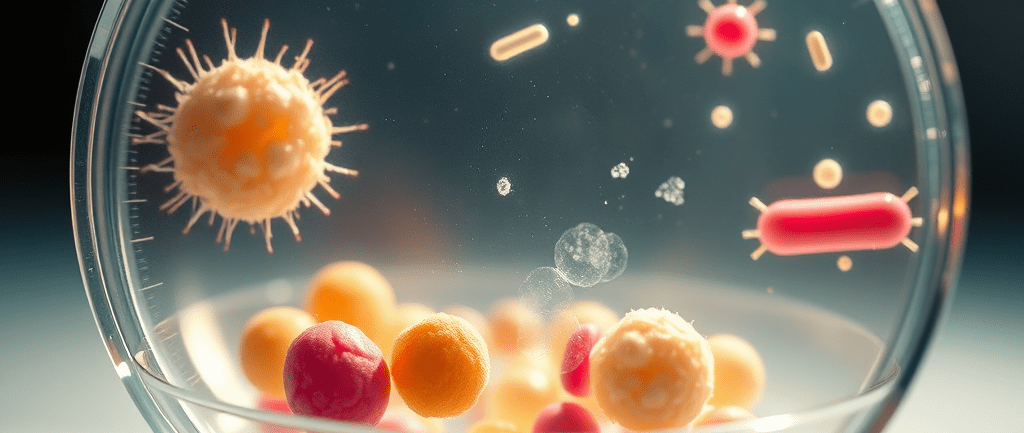
Antimicrobial resistance (AMR) occurs when microbes, especially bacteria, develop the ability to survive drugs designed to kill them. This is not a new phenomenon. In fact, resistance was observed shortly after penicillin’s clinical use, in Escherichia coli (1940) and Staphylococcus aureus (1942) [2].
Today, AMR is a major threat. Infections that were once easily treatable are becoming harder and sometimes impossible to cure.
What Drives the Rise of AMR?
Although AMR is a natural evolutionary process, human actions are accelerating it. Overuse and misuse of antibiotics, both in human medicine and agriculture, are key contributors. Antibiotics are often prescribed even for viral infections, where they have no effect.
Inadequate sanitation and poor water quality also help resistant microbes thrive and spread. Another factor is the stagnation in antibiotic development. As pathogens evolve, we need new drugs. However, pharmaceutical innovation in this area has slowed significantly.
How Bad Is It?
The World Health Organization (WHO) has declared AMR a “silent pandemic.” In 2019 alone, 1.27 million deaths were directly caused by drug-resistant infections, and AMR contributed to an additional 4.95 million deaths. These numbers are expected to rise to 10 million per year by 2050 [3].
In 2024, WHO identified 24 high-threat pathogens, including methicillin-resistant Staphylococcus aureus (MRSA), Salmonella typhi, and Mycobacterium tuberculosis [4]. These infections are becoming increasingly difficult to treat with the current arsenal of antibiotics.
The Broader Impact on Healthcare
AMR does not just make infections harder to treat. It also threatens modern medicine’s foundation. Organ transplants, cancer treatments, and major surgeries all depend on effective antibiotics to prevent and manage infections during recovery. Without them, even routine procedures become risky.
What Can Be Done?
Combating AMR requires urgent global cooperation, and individuals have a role to play too. Rational use of antibiotics is the first step. Only take them when prescribed, and never for viral infections like colds or the flu.
Vaccines also offer a promising way to reduce reliance on antibiotics by preventing bacterial infections in the first place. Beyond that, researchers are exploring alternative therapies. Bacteriophages, viruses that infect and kill bacteria, are gaining attention. Another area of interest is the use of antimicrobial peptides, which are naturally occurring molecules that can kill bacteria without promoting resistance [5,6].
The Urgency of Now
AMR is often compared to climate change, as both are slow-moving crises with global consequences. Without investment in sanitation, antibiotic stewardship, and novel therapies, we risk entering a post-antibiotic era where even minor infections could become deadly.
As researchers have emphasized, “Resistance needs to be seen in a similar light to other global challenges threatening human existence.”
The time to act is now.
References
- Aminov, R. I. (2010). A brief history of the antibiotic era: Lessons learned and challenges for the future. Frontiers in Microbiology, 1, 134. https://doi.org/10.3389/fmicb.2010.00134
- Davies, J., & Davies, D. (2010). Origins and evolution of antibiotic resistance. Microbiology and Molecular Biology Reviews, 74(3), 417–433. https://doi.org/10.1128/MMBR.00016-10
- Antimicrobial Resistance Collaborators. (2022). Global burden of bacterial antimicrobial resistance in 2019: a systematic analysis. The Lancet; 399(10325): P629-655. DOI: https://doi.org/10.1016/S0140-6736(21)02724-0
- World Health Organization, 2024. WHO bacterial priority pathogens list, 2024: bacterial pathogens of public health importance, to guide research, development, and strategies to prevent and control antimicrobial resistance. World Health Organization.
- Salam, M.A., Al-Amin, M.Y., Salam, M.T., Pawar, J.S., Akhter, N., Rabaan, A.A. and Alqumber, M.A., 2023, January. Antimicrobial resistance: a growing serious threat for global public health. In Healthcare (Vol. 11, No. 13, p. 1946). Multidisciplinary Digital Publishing Institute.
- Sharma, C., Rokana, N., Chandra, M., Singh, B.P., Gulhane, R.D., Gill, J.P.S., Ray, P., Puniya, A.K. and Panwar, H., 2018. Antimicrobial resistance: its surveillance, impact, and alternative management strategies in dairy animals. Frontiers in veterinary science, 4, p.237.


 Scientect