
Author: Muganti Rajah Kumar
Affiliation: Co-Editor, Scientect
Date: 19 May 2025
Tryptophan is one of the essential amino acids that our body uses to produce proteins that support various functions, primarily mood regulation, sleep, appetite control, and overall neurological functions.
Our body can’t make tryptophan on its own, so we must obtain it through our diet (Zuraikat et al., 2021). Tryptophan is found in:
- 🍌 Bananas
- 🥚 Eggs
- 🥛 Dairy
- 🥒 Probiotic/fermented foods (such as kefir, yogurt, and tofu)
- 🐟 Oily and fatty fish (such as salmon, tuna, and mackerel)
- 🌰 Nuts and seeds (such as walnuts and flaxseed)
- 🫘 Beans (such as chickpeas, kidney, pinto, and black beans)
- 🥬 Leafy greens (such as spinach and kale)
Can Tryptophan Really Make You Happier?
Once consumed, tryptophan is primarily converted into 5-hydroxytryptophan (5-HTP), which is then transformed into the neurotransmitter serotonin (5-HT). Eventually, serotonin is further converted into N-acetyl-5-HT and finally into melatonin, the hormone that regulates our sleep-wake cycle (Zuraikat et al., 2021).
But that’s not all. Our body also converts some tryptophan into nicotinamide adenine dinucleotide (NAD), a coenzyme that’s crucial for energy production and cellular health. This is why tryptophan is considered a dietary source of niacin (vitamin B3), which supports energy metabolism, brain function, and skin health (Kubala, 2023).
Tryptophan itself exists in two forms: L-tryptophan and D-tryptophan. The only difference between them lies in the orientation of their molecules, and of these, L-tryptophan is the form primarily used by the human body.
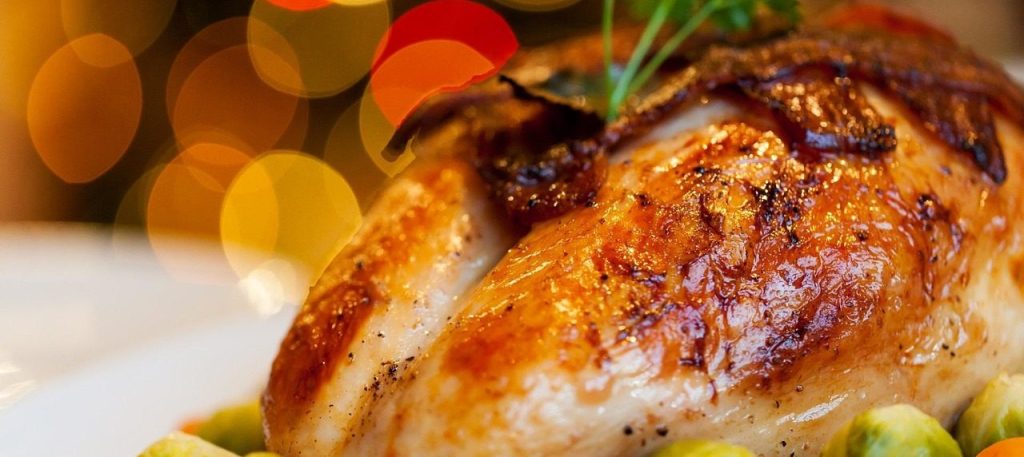
The link between eating tryptophan-rich foods like turkey and feeling happier isn’t as straightforward as it might seem. While tryptophan is a precursor to serotonin, its actual effect on mood depends on many factors: how much tryptophan reaches the brain, the presence of other competing amino acids, and the individual’s gut health and enzyme activity.
Some researchers argue that the tryptophan in turkey doesn’t significantly influence serotonin production because it competes with other amino acids to cross the blood-brain barrier (Turner et al., 2019). So, while there is some scientific basis to the idea that tryptophan contributes to mood regulation, others caution that eating turkey alone won’t boost your mood overnight.
In short, studies both support and question the direct impact of dietary tryptophan on mood. And that’s the beauty of human biology. We’re all different, and so are our responses. What may work for one person might not work for another, and that’s okay!
The Link Between Serotonin and Gut Health
Serotonin is a monoamine neurotransmitter that carries messages between nerve cells in the brain (central nervous system) and body (peripheral nervous system). But did you know that over 90% of serotonin is actually produced in the gut, not the brain?
Trillions of microbes in our gut, especially Lactobacillus and Bifidobacterium, help regulate serotonin levels (Cao et al., 2018). These gut microbes ferment dietary fiber to produce short-chain fatty acids (SCFAs), which signal our gut cells to release serotonin. This serotonin then communicates with our brain through the gut-brain axis via the vagus nerve, influencing digestion, mood, sleep, and even stress levels. We’ll explore this deeper in upcoming topics, but for now, just remember—when your gut is happy, your brain is happy too!
This is why probiotic-rich foods (like yogurt, kefir, and kimchi) and fiber-rich prebiotics (like bananas, oats, and legumes) can improve gut microbiome health and, in turn, serotonin levels.
What Happens When You Have Low Serotonin?
When your diet lacks tryptophan—an essential building block for serotonin—your body may struggle to produce enough of this important neurotransmitter. This can lead to:
- Mood disorders – Low serotonin levels are often linked to depression, anxiety, and irritability.
- Sleep disturbances – Since serotonin is needed to make melatonin, a deficiency can lead to insomnia or disrupted sleep.
- Digestive issues – Serotonin helps regulate gut motility, so low levels may contribute to digestive problems like irritable bowel syndrome (IBS).
- Cravings and appetite changes – Low serotonin may increase cravings for carbs and sweets as your body looks for ways to boost serotonin production.
What Happens When You Have High Serotonin?
Eating more tryptophan-rich foods can support serotonin production, although this isn’t the case for everyone, and more isn’t always better. While slightly elevated levels may offer benefits, excessive serotonin, especially from medications or supplements, can pose risks. Here’s what can happen when serotonin levels are too high:
- Elevated mood and emotional stability – In the short term, higher serotonin may enhance mood and reduce anxiety.
- Improved sleep – More serotonin can boost melatonin production and improve your sleep cycle, but the relationship isn’t straightforward and it depends on various factors.
- Reduced libido – Chronically high serotonin can suppress dopamine, which may lead to decreased sexual desire.
- Serotonin syndrome (in extreme cases) – This serious condition, typically caused by medications that raise serotonin too much, may lead to confusion, restlessness, rapid heartbeat, and even life-threatening symptoms.
How to Boost Serotonin Beyond Food?
While diet plays a crucial role in serotonin production, there are other natural ways to boost its levels (Young, 2007):
- Sunlight exposure – Natural light helps stimulate serotonin production in the brain, which is why spending time outdoors can improve mood and energy levels.
- Exercise – Physical activity, especially aerobic exercises like walking, running, or cycling, has been shown to increase serotonin levels, reducing stress and anxiety.
- Massages – Studies suggest that massages can lower cortisol (the stress hormone) while increasing serotonin and dopamine, promoting relaxation and emotional well-being.
- Social interactions and mindfulness – Engaging in positive social activities, practicing meditation, and reducing stress can also help maintain healthy serotonin levels.
We’ve explored how tryptophan contributes to serotonin production and how serotonin plays a crucial role in our mood, sleep, and gut health. While the connection between diet and happiness is fascinating, it’s also complex. So, the next time you enjoy a turkey sandwich, just know it might help, but your mood is also shaped by many other factors.
In the next article, we’ll look deeper into how melatonin affects our gut and overall health. Stay tuned!
References
- Cao, Y.-N., et al. (2018). Saudi Journal of Gastroenterology, 24(1), 59–66. https://doi.org/10.4103/sjg.SJG_333_17
- Croft, H. A. (2017). The Journal of Sexual Medicine, 14(12), 1575–1584. https://doi.org/10.1016/j.jsxm.2017.10.068
- Uphouse, L., & Guptarak, J. (2010). In Handbook of Behavioral Neuroscience, 21, 347–365. https://doi.org/10.1016/S1569-7339(10)70089-8
- Young, S. N. (2007). Journal of Psychiatry & Neuroscience, 32(6), 394–399.
- Zuraikat, F. M., et al. (2021). Annual Review of Nutrition, 41, 309–332. https://doi.org/10.1146/annurev-nutr-120420-021719
- Kubala, J. (2023). Niacin (Vitamin B3): Benefits, Dosage, and Side Effects. Healthline. https://www.healthline.com/nutrition/niacin-benefits
- Turner, E. H., Loftis, J. M., & Blackwell, A. D. (2019). The Conversation. https://theconversation.com/turning-to-turkeys-tryptophan-to-boost-mood-not-so-fast-125633
- Healthline Editors. (n.d.). Tryptophan: Benefits, Side Effects, and More. https://www.healthline.com/health/tryptophan#takeaway



 Scientect