
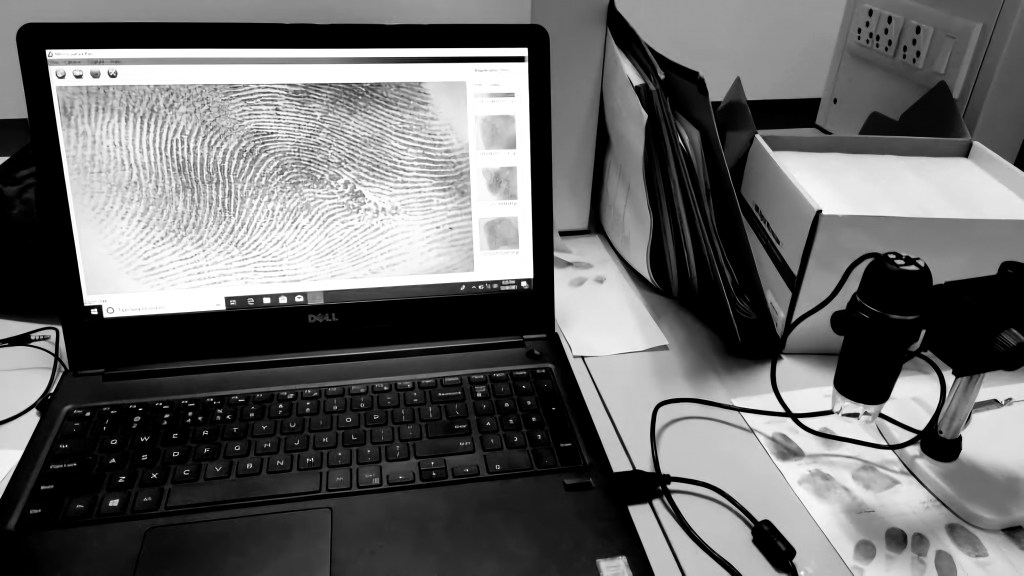
The conundrum of ascribing the scope of fingerprint analysis as either an art or science has been there for quite a long time. It is a common question often raised during fingerprint forums or sessions.
By definition, we can say that science is the conscious effort made by man to understand and explain the universe through experimentation and observation while on the other hand arts is an expression of the world based on one’s intuition and imagination. “Art means something intuitive, imprecise, and subjective, a skill cultivated through practice and imagination. Science means something researched, measured, and objective, a hard statistic backed by federal funding and white coats” 1.
Fingerprint in Forensic Science
Over the years a lot of work including research, analysis, evaluations, propositions and publications has been done to support the fact that no two individuals have the same fingerprint. The uniqueness in the fingerprints of individuals has been proven and widely accepted by the scientific community, and there has not been a single reported incident of two individuals tending to have the same fingerprints. The field of fingerprint examination is built on the understanding that every individual possesses unique fingerprints that remain permanent throughout their lifetime.
Fingerprint as an Art
The point of referring to fingerprint analysis as an art largely stems from the stage of “evaluation” and “validation” during the examination process (ACE-V). That is when the second examiner (analyst) doing the validation process comes up with a different conclusion from that of the initial examiner. An assertion often brought up by critics of the scientific basis of fingerprint analysis is that fingerprint analysis does not always guarantee that two analysts will obtain the same results.
It is common to find fingerprint experts opine that fingerprint analysis is an art because individuals undergoing training with an art background perform better than their contemporaries hence an indication or justification of why the field is art-inclined.
Fingerprint as a Science
The concept of fingerprint formation, identifying and enhancing latent fingerprints, collecting fingerprints and preserving them for analysis requires an undeniable amount of scientific knowledge, understanding, tools and technology. Fingerprint examination is objective with standard protocol of operation adhering to a scientific process.
The process of fingerprint comparisons should theoretically be free of error, as it either involves a match between a crime scene fingerprint and a known print or not. The methodology employed by examiners also adheres to the scientific method. An examiner employs the ACE-V methodology for fingerprint analysis, which comprises four stages 2.
Conclusions and Comments
From both an artistic and a scientific perspective in trying to put fingerprint analysis within the umbrella of arts or science, the propositions made in favour of the field as an art are insignificant and trivial. Furthermore, placing the discipline of fingerprint analysis as both an art and a science is simply nothing other than a pacifist approach. The discipline falls within the scope of science because there is a laid down reliable, reproducible and validated procedure for fingerprint analysis, individuals do not compound their own procedures of analysis.
The fact that two experts may conclude differently on the same piece of evidence is not a proof of artistry, but an expression of how rigorous the analysis process is hence highlighting the need for proper education, monitoring and training. Fingerprint examination just like any other forensic analysis (discipline) is susceptible to a degree of human error (human factor) and must always be taken into account and consideration.
Moreover, just because someone with an art background dominates another from “maybe” a science background in a particular domain does not necessarily mean that domain is art-inclined. Sometime back a friend from a non-science background had to take physics at the tertiary level, he asserted that he performed better than most of his colleagues from a science background and even with prior physics knowledge. Additionally, he informed me that he noticed most of them from a non-science/physics background generally performed better than those with a physics background. However, physics remains physics and in a broader sense a science.
Often when I hear fingerprint experts assert that fingerprint analysis is an art, I notice that they usually do so in a way to highlight their prowess. Some of the follow-up explanations likely added to buttress their stance are that an expert needs to be meticulous and also have a high retentive memory. All these characteristics are even more required in a science than an art, hence attributing fingerprint analysis to an art is no doubt a misnomer.
Lastly, progress has been made in the detection, identification and analysis of biomolecules from fingerprints to determine the diet, lifestyle, object of contact, etc. to corroborate, support and boost the individualization of persons through fingerprint deposits 3, these developments greatly demonstrate the inclination of the field of fingerprint to science.
Recommendations
Fingerprint analysis should be described as a science only because associating it with art opens room for subjectivity and doubt in the methodology. Also, it reinforces and motivates the harsh critics of forensic science to continue to pursue their agenda of seeking to invalidate solid and robust forensic science techniques.
Human error and cognitive bias are key challenges in the analysis, reporting and interpretation of fingerprint evidence, thus it is a wake-up call to all forensic science practitioners and stakeholders to continuously review and research the field of fingerprint and to seek out the appropriate means to tackle them.
We are in times of an increase in demand for a paradigm shift in fingerprint analysis. Morrison GS,4 highlights the ongoing shift in paradigm and calls on various stakeholders to reconsider employing statistical frameworks for the evaluation of forensic science evidence in general. He emphasizes on the need for a shift from methods that rely on human perception and subjective judgments to methods that are based on relevant data, quantitative measurements, and statistical models.
References
1. The Art and Science Of… – Yale Scientific Magazine. Accessed May 12, 2024. https://www.yalescientific.org/2013/02/the-art-and-science-of/
2. Forensics- Art or Science? – Crime Museum. Accessed May 12, 2024. https://www.crimemuseum.org/2009/03/13/forensics-art-or-science/
3. Bradshaw R. MALDI mass spectrometry profiling and imaging applied to the analysis of latent fingermarks. In: Methods in Molecular Biology. Vol 1618. Humana Press Inc.; 2017:149-163. doi:10.1007/978-1-4939-7051-3_13
4. Morrison GS. Advancing a paradigm shift in evaluation of forensic evidence: The rise of forensic data science. Forensic Sci Int. 2022;5. doi:10.1016/j.fsisyn.2022.100270





 Scientect
Leave a comment