

This year’s 4th Forensic DNA Symposium (#4FDNAS) was held in the beautiful city of Livingstone, Zambia. Livingstone is the home of the mighty Mosi-oa-Tunya/ Victoria Falls. The beauty of the sunset on the Zambezi river and the Victoria Falls rainbows so close to touch at day and night time is beyond imagination.


The #4FDNAS is one of the most prestigious international forensic science events in Africa, co-organised by DNAforAfrica, UNODC, ICRC, and the University of Cape Town (UCT).
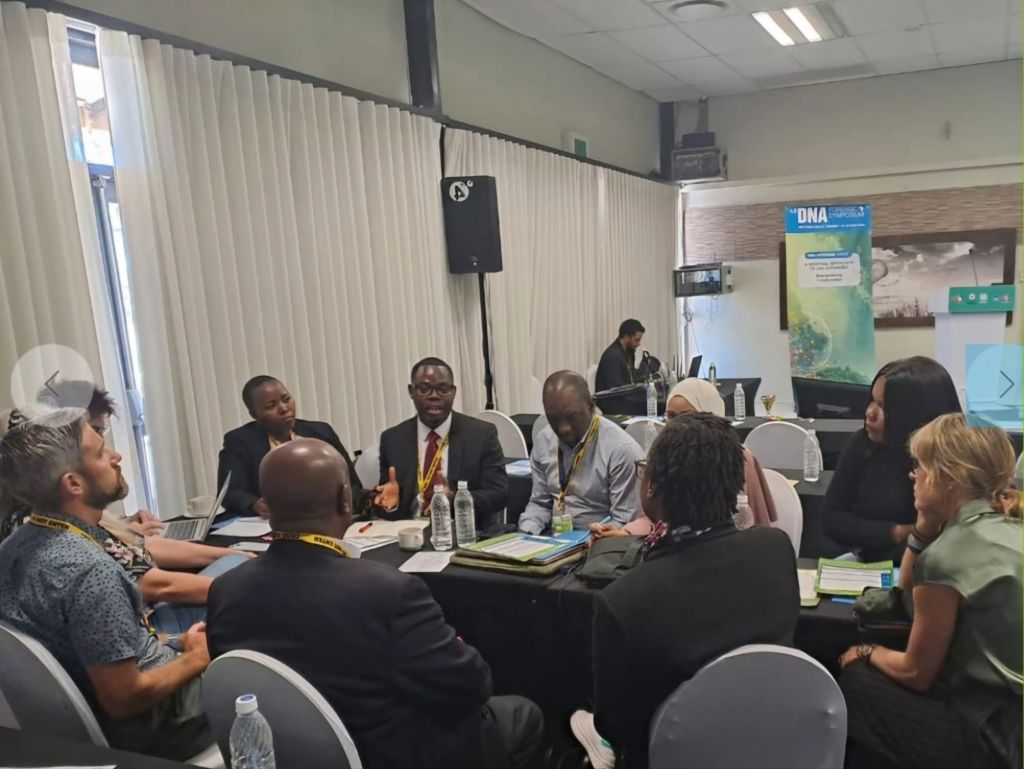
The format for this year’s event featured interactive panel discussions, focus group activities, and concise expert presentations on key topics on forensic DNA capacity and gender-based violence (GBV) interventions in Africa. Details of the event and outcomes can be found here: https://www.dnaforafrica.com/4fdnas2024
Reflecting on the discussions at the Symposium, the intense passion and enthusiasm to drive forensic science capacity in the region and promote international collaboration, it was clear that there is a need to establish what I call an African Forensic Science Vision.
A number of African countries have already taken the lead in what this vision should look like. Notably, Zambia, the first country in the world to establish a National Forensic Authority, backed by legislation, and South Africa, with the most advanced forensic science capabilities in the region, including the largest national DNA database and a key stakeholder in the international exchange of DNA data via INTERPOL.
One of the major themes that emerged from the Symposium was the need for regional forensic science cooperation to exchange expertise, share resources and enhance the fight against cross-border crime and assist in humanitarian efforts to find the missing and identification of unidentified human remains (UHRs) via the INTERPOL I-Familia kinship matching database.
To achieve these aims, the proposed African Forensic Science Vision should recognise and promote equivalence in five key areas at the national/ local level to ensure consistency in practice across the region and to ensure that forensic results from one country is recognised as reliable in another country:
- Infrastructure: Minimum infrastructure requirements should be set by relevant stakeholders, including national and regional law enforcement agencies, forensic science institutes, the justice systems, government bodies, accreditation bodies, professional forensic science societies, and criminal justice practitioners. This should cover all forensic science activities (including crime scene support, lab. analysis, intelligence databases, allele frequency databases, interpretation/evaluation, communication tools, and research support)
- Expertise: A minimum level of expertise for providers/ practitioners should be defined to ensure respect for expertise from all countries. At least a formal education in the sciences, general and specialist training in forensic science, competency/ proficiency tests, and CPDs in forensics should be included in the criteria for assessing expertise.
- Quality Standards: Minimum quality standards/ accreditation requirements based on ISO standards/ ILAC G19 (ISO17020, ISO17025, ISO18385, ISO21043) should be defined by national/ regional accreditation bodies and relevant forensic science authorities. All forensic activities must be consistent with the requirements of international standards, and a robust quality management system must be in place in the absence of formal accreditation.
- Laws & Policies: Harmonisation of laws and policies to allow efficient regional cooperation (e.g., laws and policies on the collection, retention, use and sharing of forensic data, including the use of DNA databases; control of substances of abuse, disclosure requirements; criminal procedure rules; data protection principles for sharing of genetic data, and sensitive personal information).
- Oversight/ operational framework: To comply with the principles of transparency, fairness and accountability, adequate safeguards on the independence of forensic practice (including access to forensic services by defence) need to be in place, especially where forensic science provision is embedded in, managed, or funded by the police.
These five key areas are covered in part in the UNODC-ROSAF commissioned handbook on forensic evidence processing in GBV focused on the SADC region.
A defined African Forensic Science Vision/ Action Plans, spearheaded by relevant African Union (AU) agencies, regional economic development communities, government bodies, professional groups, and charity organisations or NGOs, can encourage and facilitate forensic science capacity building in Africa. This will complement other key security and humanitarian interventions to fight the crimes, and the humanitarian issues, that plague us, including GBV, conflict-related sexual violence, armed conflict, mass migration, drug and human trafficking, terrorism and natural disasters.
I heard on the grapevine that the next symposium will be organised at an exciting venue in or outside Africa. I look forward to the next event and to hear all the great developments and impact colleagues have gone on to make in their respective fields in the region.


 Scientect