
Author: ALSA Ghana Research Team (Headed by Ama Annobil)
Importation of used goods, usually termed as ‘second hand’ products has been like a cankerworm eating slowly at Ghana’s economy as used items such as electronics, cars, and clothes in commercial quantities are shipped into Ghana on a regular basis. Even as the country continues to bear the menacing effect of this, the threat posed by the importation of used clothes in recent years has become much more devastating.
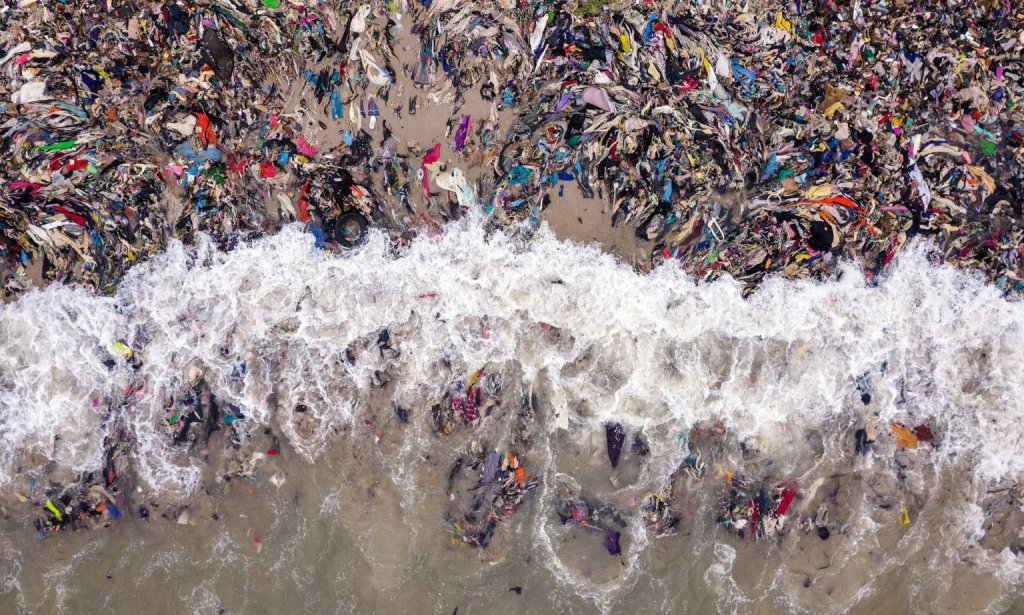
Earlier in 2023, it was reported that heaps of unwanted clothing have now resulted in an environmental crisis in Ghana. The Tony Blair Institute for Global Change gave the stipulations that, out of the 65 million tons of used clothing sent to Ghana in 2019, about 40% which were not sold were discarded and these items notoriously ended up in landfills and in the sea.
Again, researchers have argued that the fast fashion second-hand market has affected seamstresses’ lives in various facets from business to livelihoods as the clothing industry in Ghana has seen a shift from the traditional demand for custom-made apparel to Westernized, mass-produced clothing (Doe, 2022). Being cheap and readily available to the consumer, Baden & Barber (2005) has noted that this thriving second-hand clothing market played a major role in undermining industrial textile or clothing production and employment in West Africa since the 1990s.
They further claimed that Ghana’s locally produced clothing industry has suffered a significant decline on this accord.
Aside from causing this serious decline in the Ghanaian fashion industry, the importation of second-hand clothes has been reported to cause negative effects in other sectors of the economy. For example, fishermen are beginning to raise the issue that instead of hauling fish out from the sea, they are rewarded with huge heaps of clothing stuck in their nets.
According to Kofi Sarpong, one fisherman interviewed at the Labadi beach by Or Foundation, ‘This has been the trend for some years now. Fishermen are finding it hard to make a livelihood.’
Environmental activists and groups like the Ghana Water and Sanitation Journalists Network (GWJN) have called it a major catastrophe in the making and are trying to raise awareness about this underreported issue. Though the importation of these usually gets adverse reactions from time to time, it has become expedient to tackle the issue once and for all looking at the disturbing mayhem that second-hand clothes are causing not only to the economy but to the environment as well. Other African nations have adopted a more proactive and daring approach, enacting bans.
Rwanda, for example, banned second-hand clothes imports in 2018 in order to boost its own textile industry and other nations have followed suit. In 2020, Kenya also followed suit but on the premises to curb the spread of COVID-19, after which it lifted the ban because of its economic impact on people’s livelihoods.
Ghana’s government has remained silent so far on the issue, and there is no sign that it might take any action to deal with the problem of secondhand clothes. However, we can take a conclusive cue from the public backlash that the government got when it tried to issue a ban on the importation of second hand electronics. Many with the fear of the effect it will cause to livelihoods, have agreed that an absolute ban on these products would likely impose extra economic hardships on countless people dependent on them, but our hypothesis is that Ghana can take a cue from Rwanda, which has adapted quite well even after it took the dreaded initiative.
This opens up the need for specific laws that may first of all seek to ban the importation of these clothes or develop stringent guidelines for its importation. As it is now, there is no sufficient supervision in this area of importation. The resulting effect is that low-quality clothes or bales of clothing that did not meet the standards of the British consumer are freely shipped into Ghana. Then again, most of these clothes are produced in China and are rejected by store management because they failed to meet quality control.
A robust law addressing the importation of second-hand clothing into Ghana must make provisions for quality control where the burden is placed on sellers to ensure the quality of the clothes they buy. Correspondingly, there must be punitive measures to take on those that fail to meet this legal requirement. It is worth noting that a much more robust law should ban the importation of used clothes altogether. However, coupled with other stringent guidelines, a guiding rule will serve as both a deterring factor as well as a means to encourage the importation and commercialization of only quality goods.
A robust law must also supervise the implementation of the rules set therein. There must be a body to ensure the regulation and implementation of the legal measures taken. Collectively, such a law that seeks to ban or impose stringent measures on the importation of secondhand clothes into Ghana must place regulative measures on quality control, and punitive measures on defaulters and establish a body to supervise, implement or execute the rules as stated in that respect.
The seamstress profession is an entrepreneurial skill that many livelihoods revolve around and fashion constitutes an integral part of style and appearance in our daily lives. In fact, it forms part of our basic needs hence much revenue can be gained from it is on the condition that it is well backed. Also, seeing that a ban or strict regulations in the importation of second-hand clothes will cause a rise in the industrialization of locally made clothing, not only will the government stand to gain, individuals or the public stand to benefit as well. In conclusion, the initiative to ban or impose stringent rules on the importation of second-hand clothing in Ghana will benefit all.
Featured Image Source: Muntaka Chasant
Subscribe below to keep up-to-date with all our latest articles via email inbox


 Scientect