
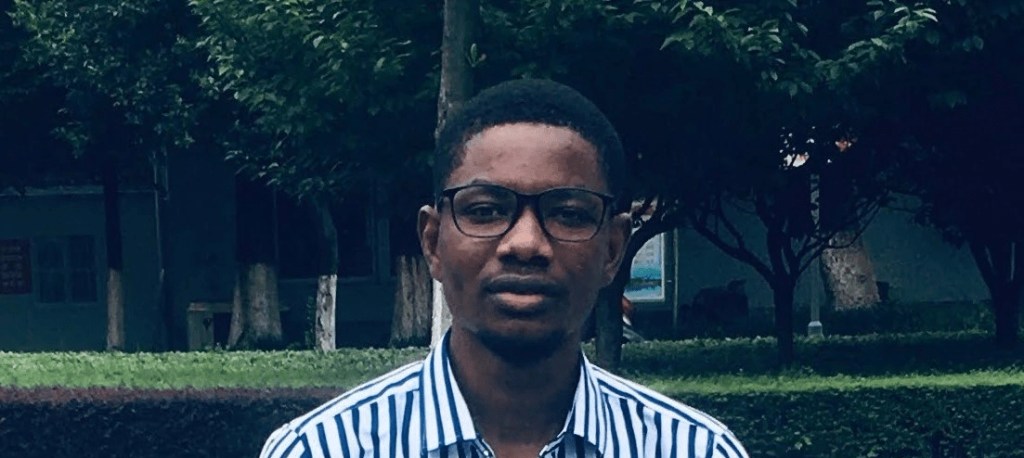
Interviewed by Mohammed Lawal, Osman Abdulai Seidu, Sandra Abukeremah Nsoh & Yahaya Sumara Sulley
(The Confident Scientist STEM Network, Nyankpala -Ghana)
Let us step into a world where the unimaginable becomes reality. Can nanotechnology, reshape industries, propel medicine, and unlock renewable energy? Should we embrace a revolution that could redefine our future?
On this episode of “The Convo,” we dive into the realm of nanotechnology, a field that deals with the manipulation and control of matter at the smallest scales with Mr. Emmanuel Okoampah, a lecturer in biochemistry and molecular biology at the University for Development Studies, Ghana. As we embark on this enlightening journey, we will navigate through the latest advancements and breakthroughs, envisioning a Ghana where nanotechnology revolutionizes industries, medicine, energy, and beyond. We engaged a visionary in the field who unveils the exciting possibilities that lie ahead as we embrace a future where tiny particles unlock enormous possibilities.”
Mohammed Lawal: What is your area of specialization in nanotechnology and what is the focus of your research?
Emmanuel Okoampah: I am currently a Lecturer at the Department of Biochemistry, Faculty of Biosciences, University for Development Studies. My area of specialization encompasses the development of nano drugs, renewable energy generation, wastewater treatment, antacid potential, antimicrobial properties of nanoparticles, and frontline epidemiology.
Osman Abdulai Seidu: Can you provide a brief overview of the evolution of nanotechnology?
Emmanuel Okoampah: Nanotechnology emerged as a multidisciplinary field in the 1980s that sought to manipulate matter or measure its constituent components on a molecular scale, typically within the size range of 1-100 nanometers (nm). This scale is significantly smaller than the microscale and allows for the creation of novel materials with unique properties and functions. The concept of nanotechnology has since evolved to include the development and manipulation of nanoscale materials and devices for various applications in industries such as medicine, agriculture, and electronics.
The Concept of nanotechnology has been in existence for decades However, there is still much research and development to be done to fully realize the potential of nanotechnology. While some aspects of nanotechnology may be considered developed, there are still many challenges to overcome and much room for growth and innovation.
For instance, in the biomedical industry, researchers are exploring the potential of nanotechnology to develop size-specific nano-drug delivery agents at disease sites. More also, In the agricultural sector, biosensors based on nanotechnology are being used to detect food spoilage and harmful toxins such as aflatoxins.
Osman Abdulai Seidu: What is the current state of nanotechnology in the scientific world?
Emmanuel Okoampah: Nanotechnology is rapidly advancing and has made significant progress in various scientific fields. For example, in the field of biomedical applications, research is being conducted on developing size-specific nano-drug agents. In addition, there are ongoing efforts to degrade dye effluents from water and also generate renewable energy employing a photo-catalysis approach. In agriculture, biosensors based on nanotechnology have been developed for sensing food spoilage and toxins, among many others. The broad range of applications and advancements in nanotechnology suggest that it will continue to have a significant impact on various scientific fields.
Osman Abdulai Seidu: What is the current state of nanotechnology application in Ghana and what measures are being taken to increase its adoption in the country?
Emmanuel Okoampah: The field of nanotechnology is still relatively new in Ghana and efforts are being made to establish it as a recognized field of study and practice in the country. Researchers are exploring the use of local and indigenous materials in their research to increase industry interest in the potential of this field. While I am not fully aware of the government’s intentions to improve nanotechnology through the technology revolution, I have had discussions with industry players in the pharmaceutical sector who are open to leveraging nanotechnology to achieve Ghana’s goal of producing vaccines.
Osman Abdulai Seidu: Does nanotechnology application in the medical and agricultural sectors have a connection with biotechnology?
Emmanuel Okoampah: Yes, there is a field of study called nanobiotechnology that explores the connection between nanotechnology and biotechnology. Nanoparticles can be synthesized and functionalized with DNA molecules or other biological molecules to create site-specific targeting agents. For example, researchers in China are developing nanoparticles that can target brain cells. In biotech labs, these nanoparticles can be used for a variety of applications such as detecting aflatoxins, biofuels, bioremediation, drug discovery and among many others. In our lab, we are studying DNA sequencing and antimicrobial properties to improve food security. Overall, the intersection of nanotechnology and biotechnology has significant potential in the medical and agricultural sectors.
Osman Abdulai Seidu: Do some nanoparticles exist naturally or unless manipulated in the lab?
Emmanuel Okoampah: Yes, some nanoparticles do exist naturally. For example, silver nanoparticles can be found in some plants, and iron oxide nanoparticles are present in some soils. However, in most cases, nanoparticles are synthesized in the laboratory using various methods such as chemical, physical or biological methods.
Sandra Abukeremah Nsoh: How does Ghana’s nanotechnology research and instrumentation compare globally, given the inadequate government support for funding?
Emmanuel Okoampah: Insufficient funding for scientific research is a significant issue in many Global South countries, including Ghana. This has resulted in self-funded nanotechnology research in Ghana. Despite an annual research and development budget, it is inadequate to support this field. Additional funding would assist in addressing numerous issues. However, a lack of necessary laboratory machines and equipment necessitates reliance on Western labs for analysis which delays experimental processes. Significant investment and strategic planning are necessary to enable local researchers to engage in nanotechnology effectively.
Mohammed Lawal: What are the regulations and safety tests for nanomaterials and their relation to food safety?
Emmanuel Okoampah: In response to the question of how nanomaterials are regulated, it is important to note that various organizations, such as the US Food and Drug Administration and the European Union, have established guidelines and regulations for the production, labeling, and marketing of nanomaterials. These regulations are aimed at ensuring the safety of nanomaterials for human consumption and environmental impact.
Regarding the safety testing process in nanotechnology, extensive research is carried out to determine the toxicity levels of nanomaterials. This involves examining the physicochemical properties of the particles, such as size, surface charge, and shape, as well as their interaction with biological systems. Toxicity tests are conducted to evaluate the efficacy and lethal effects of nanoparticles. The size of the nanoparticle is a critical factor in its delivery to the target site and minimizing toxicity. Small particles are more easily eliminated from the body through urine, making them safer.
The safety of nanoparticles is a complex issue that requires extensive research and regulation. The physicochemical properties of nanoparticles, toxicity testing, and delivery methods are critical factors in ensuring their safety. The use of nanotechnology in various fields, including the food industry, is regulated to minimize any potential health risks.
Mohammed Lawal: What are your thoughts on nanotechnology education in Ghana and Africa?
Emmanuel Okoampah: Nigeria is making significant progress in nanotechnology. For example, one university has a dedicated department of nanotechnology and biochemistry, which has achieved notable results in wastewater treatment since its inception. In Ghana, there is currently limited emphasis on nanotechnology education, but the University for Development Studies has incorporated it into the biochemistry department curriculum. This move will produce unique biochemistry graduates with expertise in nanotechnology, enabling them to incorporate it into their field of work. The education will help to raise awareness of the safe use of nanotechnology, especially in sectors such as pharmaceutical, medical, renewable energy and wastewater research. The knowledge gained will empower graduates to regulate the use of nanotechnology in their field, ensuring safe and effective implementation.
Sandra Abukeremah Nsoh: How can the public be informed about the pros and cons of nanotechnology, given the lessons learned from GMOs in Ghana?
Emmanuel Okoampah: Societal and ethical issues arise regardless of the soundness of science, including in nanotechnology. It is important to understand the physicochemical properties of nanoparticles, which can lead to their intended functions or potential toxicity. Nanoparticles already exist in various forms in our daily lives, but controlling their properties is crucial for safety. With proper resources, safe and environmentally friendly nanoparticles can be developed.
Sandra Abukeremah Nsoh: What are the potential risks associated with not developing nanotechnology in Ghana, particularly in healthcare, environmental protection, and economic development?
Emmanuel Okoampah: Nanotechnology has the potential to revolutionize various industries, including healthcare, environmental protection, and economic development. Without investing in nanotechnology research in Ghana, there are risks of limited economic growth, technological advancement, and scientific research, among other things. To mitigate these risks, the government and donor agencies must prioritize investment in nanotechnology and harness the benefits of this emerging field.
Sandra Abukeremah Nsoh: In what ways could the application of nanotechnology benefit the average Ghanaian?
Emmanuel Okoampah: Nanotechnology has the potential to revolutionize various sectors in Ghana such as healthcare, agriculture, energy, and electronics. For example, in healthcare, targeted drug delivery systems based on nanotechnology could enable more efficient treatments with minimal side effects. In agriculture, nanotechnology can be used to create more efficient and targeted pesticides and fertilizers, leading to increased crop yields and economic growth. Also in treating our polluted water bodies due to galamsey activities. Nanotechnology can also be used to produce renewable energy, a crucial step towards achieving Ghana’s goal of transitioning to green energy generation. Therefore, the government and donor agencies should invest in nanotechnology to harness its potential benefits for the average Ghanaian.
Yahaya Sumara Sulley: What steps should academia and industry take to advance the field of nanotechnology in Ghana and Africa, and is there already a synergy between the two sectors?
Emmanuel Okoampah: The field of nanotechnology is an emerging discipline in Ghana and Africa. To move forward, there needs to be an incorporation of nanotechnology into the biochemistry, biotechnology and engineering discipline. By providing an in-depth education on nanotechnology to students, research can be enhanced, and findings can be translated into industry. Nanotechnology has broad applications in diverse areas of human life. The synergy between academia and industry is still new, but it can help to promote the visibility of nanotechnology in Ghana. Presently, there have been presentations on nanoparticles from our laboratory at scientific conferences in Ghana, which is a positive sign of progress.
Yahaya Sumara Sulley: Do you foresee a budget allocation for nanotechnology research in the next decade, considering its potential benefits for the country?
Emmanuel Okoampah: With the increasing visibility and publications on nanotechnology in Ghana, private entities may show interest in investing in the field. While it may take time for the government to allocate a significant amount of budget for nanotechnology, the growth of the field in the next 10 years is promising.
Yahaya Sumara Sulley: As someone who works in the field of nanotechnology, what would you suggest to the relevant ministries regarding the implementation of science policies?
Emmanuel Okoampah: As a visionary in the field of nanotechnology, I believe that the Ministries of Environment, Science, Technology, and Innovation, and the Ministry of Education should prioritize the development of science policies. With their focus on STEM, these ministries should champion this emerging field and allocate a significant portion of their budget to nanotechnology research. In my laboratory, we have successfully used local plants to synthesize nanoparticles, which is a significant achievement compared to the conventional chemical approach used in Western countries. By investing in this research, the benefits will be widespread across all sectors. Additionally, it is crucial to ensure that students have the necessary knowledge and skills to translate classroom knowledge into research and communicate findings to the masses. By having a pool of scientists knowledgeable in nanoparticles, we can help dispel any misconceptions about the potential adverse effects of nanoparticles. As an institution, the University for Development Studies (UDS) is leading the way in championing a curriculum that emphasizes nanotechnology education.
I would like to urge policymakers and leaders in government to support nanotechnology research as an emerging field in Ghana. With enough support from the government, Ghana can become a country known for producing and utilizing nanotechnology to generate renewable energy, treating polluted water, site-specific drug development, and impact almost every field. The future will be bright with enough support from the government. I hope that the government will invest in nanotechnology and make Ghana a leader in the field.
Mohammed Lawal: If allowed by the Ghanaian government to select an area for the potential application of nanotechnology, which area would you identify for significant impact?
Emmanuel Okoampah: If I may suggest one area, I would choose the water industry. Water is essential for life, and with the increase in industrial activities, water pollution has become a significant concern. With my experience in the field of epidemiology, I am concerned with how we will be able to find a way to refine and degrade organic and inorganic pollutants from water bodies to make them safe for use. We cannot afford to import water, and I believe with the right resource and support, nanotechnology could be a game-changer in this industry.
Subscribe below to keep up-to-date with all our latest articles via email inbox



 Scientect